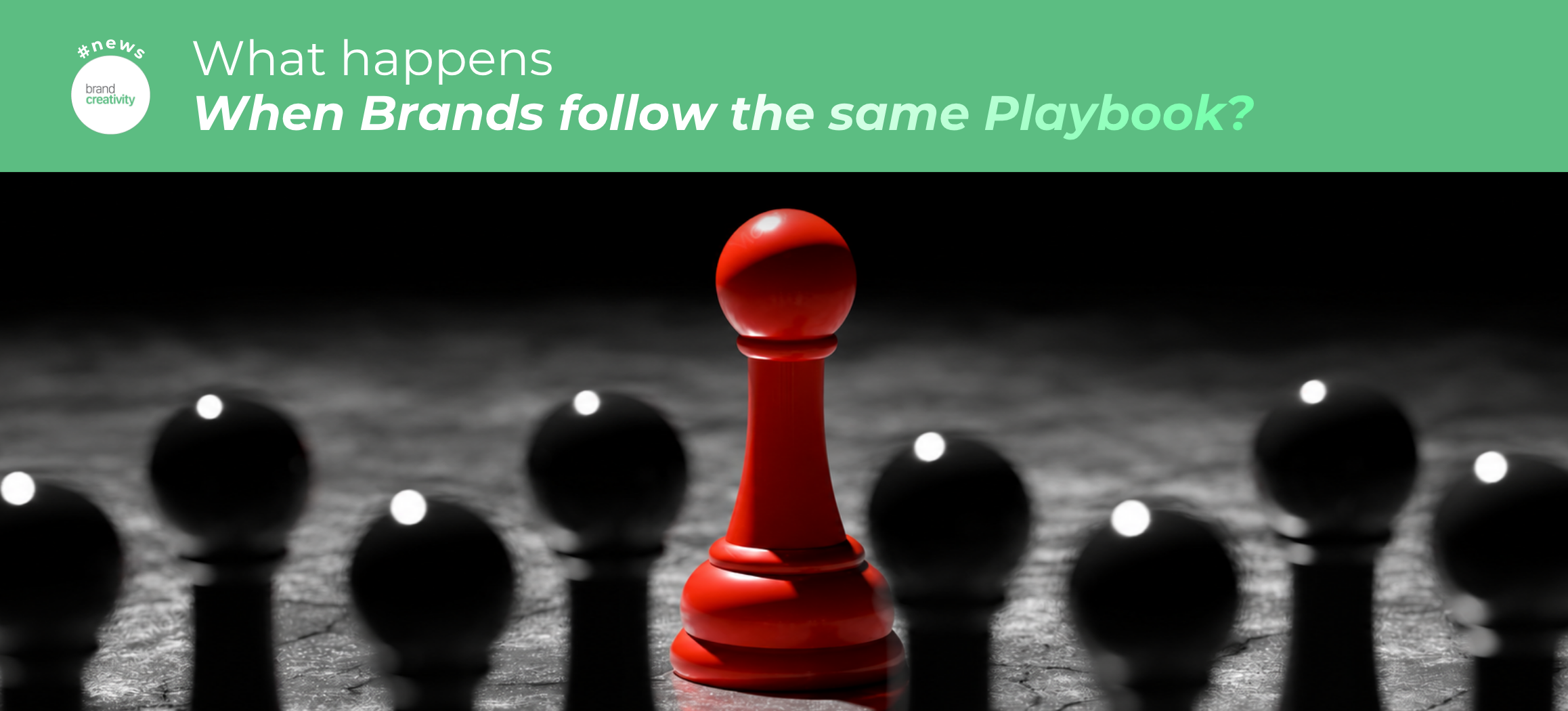
In recent years, the market has sparked a heated phenomenon: an increasing number of brands are being built with rigorous processes, strategic frameworks, and best-practice methodologies, yet they struggle to leave a lasting impression on consumers’ minds. From market research and positioning to defining brand values, crafting messaging, and designing customer experiences, everything appears polished and aligned. However, when these brands are placed beside the same category, their differences become increasingly difficult to distinguish. They speak the same language, pursue similar values, and give nearly identical messages. Through Brand Creativity’s perspective, we believe the problem is not that brands are doing things wrong. The problem is that too many brands are doing the ‘right things’ in exactly the same way.
When Brand Strategy Is Built on the Same Set of Assumptions
In How Brands Grow: What Marketers Don’t Know, Professor Byron Sharp of the Ehrenberg-Bass Institute challenges a long-held marketing assumption: consumers are far less engaged with branding than we believe they are. Most people do not spend time reading brand stories, memorizing mission statements, or consciously analyzing brand identities. Instead, purchase decisions are often driven by what is easy to recognize, easy to recall, and readily available at the moment of need.
From this perspective, Brand Creativity sees a fundamental paradox. Many brands continue to invest heavily in explaining who they are, while overlooking a far more important question:
Will people remember the brand when they actually need it?
A case study - The Standardization of Brand Messaging and How to Win a Place in Consumers' Minds
One of the most visible consequences of this thinking is the standardization of brand messaging. Across industries such as banking, real estate, education, and FMCG, we usually see familiar statements: ‘Customer-centric’, ‘Constant innovation’, ‘Sustainable value’, or ‘Empowering’. None of these claims is inherently wrong. However, according to Byron Sharp, they do little to increase mental availability - the likelihood that a brand comes to mind when a specific buying situation or need emerges. Brands do not truly compete based on who tells the most compelling story; they compete based on who gets remembered first and in the most relevant context.
McDonald’s provides a classic example of this approach. The brand rarely focuses its communications on culinary philosophy or abstract values. Instead, it consistently invests in reinforcing key Category Entry Points (CEPs): a quick meal when you're busy, a familiar choice for children, or a convenient stop during a road trip. Its golden ‘M’ letter, signature color palette, packaging, and omnipresent visual cues are not designed to explain the brand. They are designed to trigger memory instantly. From a branding perspective, McDonald’s demonstrates that effective brand building is less about the depth of the narrative and more about being present in the right moment.

When Sophistication Becomes a Barrier to Recognition
Ironically, newborn brands usually fall into a different trap: excessive refinement. Their visual identities become so minimal that they feel neutral. Their color systems are safe. Their tone of voice is gentle and universally acceptable. Their expressions of purpose and humanity begin to resemble one another. When putting these brands together, the aesthetic sense is correct, yet it leaves little trace in consumers’ memories. Byron Sharp refers to the key assets in this context as Distinctive Brand Assets - the recognizable elements that allow a brand to be identified even without seeing its name. Unfortunately, many brands sacrifice these assets in pursuit of category conventions and contemporary design trends.
Burger King offers an interesting case study. After years of pursuing a sleek, modern style, the brand deliberately returned to a retro visual style characterized by bold colors, nostalgic design cues, and typography that some might even describe as intentionally imperfect. The objective was not to appear more premium. It was to regain distinctiveness in a category where every competitor was communicating similar messages around quality, experience, and product superiority.

Branding Is Not About Discovering a Unique Identity. It Is About Building Memory
From our perspective, differentiation does not have to be profound or complex, but it needs to be recognizable and consistently repeated over time. A brand may not possess an elaborate philosophy, but if it owns clear, distinctive assets and shows up consistently in relevant situations, it can still build sustainable brand strength. Brand building, therefore, is not merely a journey of defining ‘who we are’. It is the discipline of designing for a more strategic question: When a need arises, will consumers think of us and for a very specific reason? Because if a brand is not remembered, even the most compelling story will never have the opportunity to be heard.
Source:
Sharp, B. (2010). How Brands Grow: What Marketers Don’t Know. Oxford University Press.