Over more than 20 years working in brand positioning and repositioning, we have witnessed many businesses brave enough to confront an uncomfortable truth: a brand does not grow the way we want it to, but the way customers perceive it. Like a child, a brand may be raised with the aspirations of adults, yet it grows based on the signals it absorbs from its environment and the way it adapts to constant change.
Why does “personality” matter so much?
At Brand Creativity, we always approach a brand as if it were a human being. This is not just a metaphor — it is a strategic model: Your Brand, Your Baby.
A child must learn how to speak, behave, and show up in the world. A brand is no different. Brand personality — whether warm, bold, refined, or strong — is not defined in a boardroom; it is shaped through repeated behaviors over time: how the brand responds to customers, how it resolves problems, the language it chooses, the emotions it expresses at every touchpoint.
This is why Brand Creativity uses Brand Archetypes as an association tool — not to “box in” the brand, but to help internal teams visualize more intuitively:
“If the brand were a person, how are we raising it? Which traits are being reinforced every day?”
The gap between expectations and reality
In a recent repositioning project for a client among the global Top 500 brands operating in Vietnam, the internal team described their brand as a vibrant young man — pioneering, agile, ready to explore and lead.
But through market research and user listening, a very different picture emerged: a respected man in his fifties — warm, compassionate, trustworthy, yet slow-paced.
It was a genuine surprise. The brand asked itself: Where did we go wrong?
In truth, neither image was wrong — they belonged to two different systems of perception. If the internal team believes their “child” is in its prime while society sees a “mature adult in need of renewal,” the entire marketing, communication, and service strategy will inevitably derail.
This is the most dangerous gap for any brand: the perception gap.
The wider it becomes, the further the brand drifts from the market and its customers — turning brand storytelling into a complete mismatch.
Brand Archetypes – the mirror that reflects the brand back to itself
![Brand Archetypes: The Definitive Guide [36 Examples]](https://iconicfox.com.au/wp-content/uploads/2018/05/iconic-fox-Atchetypes-12-jungian-map.jpg)
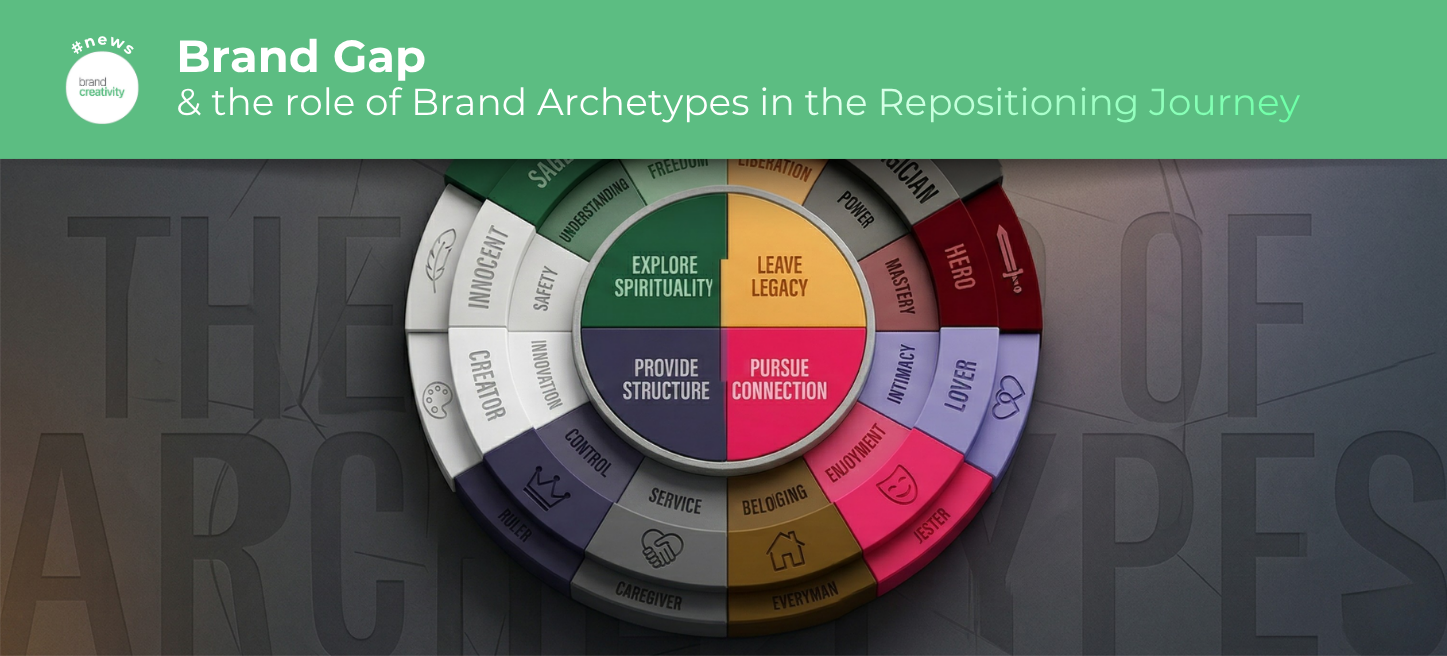
The Brand Archetype model is grounded in Carl Jung’s research on universal personality patterns embedded in the human psyche — templates we recognize almost instantly.
Applied to branding, archetypes help both internal teams and the market envision the brand as a “real person”:
- The Hero strives beyond limits and inspires through achievements.
- The Explorer seeks new paths and rejects monotony.
- The Caregiver embodies compassion and service.
- The Sage represents wisdom and enlightenment.
These archetypes are not meant to confine the brand; they help ensure consistent associations between personality and behavior.
From tone of voice to visuals to service experience, every touchpoint gains a clear rationale for expressing the “person” the brand aims to become.
Most importantly, an archetype serves as a mirror — reflecting the distance between who the brand thinks it is and who the market actually sees. This is the starting point for adjusting and nurturing the brand’s true identity.
At Brand Creativity, we do not use archetypes to “choose a personality” for a brand. We use them as a diagnostic tool, helping businesses confront the deceptively simple question:
“Who do we believe we are? And who does the customer see?”
This tool connects two worlds:
- The internal world — where the brand is raised by ambition, vision, and aspiration.
- The external world — where the brand is shaped by experiences, emotions, and market reality.
When these worlds meet, the brand becomes a true human being — coherent, distinctive, magnetic.
When they misalign, the brand becomes “a child growing up into someone we didn’t expect.”
Reconciliation: bridging the two layers of perception
In the case study above, we did not attempt to turn the brand into a “young, dynamic person” merely because internal teams wished it so. Instead, we sought the intersection between the two images: the trustworthiness and maturity recognized by the market, and the spirit of innovation the internal team wished to preserve.
When the personality a brand believes it has does not match how customers genuinely perceive it, this is not a failure — it is a sign of maturity.
Just as a child grows and expresses traits different from what parents imagined, a brand must be observed with honesty.
The moment the two images diverge is precisely when the repositioning journey must begin — not to build an entirely new person, but to adjust, guide, and “raise” the brand in the direction the market is responding to.
Brand building is not about crafting an ideal personality for the market to accept. It is an ongoing dialogue between the inner self and the way the world sees us. When a brand dares to face the mirror of the market — even when the reflection differs from expectations — it marks the beginning of true maturity.
Repositioning is not about changing the brand’s core personhood; it is about helping it live truthfully — aligned with its essence, its context, and the role the market expects it to play.
Like a growing child, a brand must be raised with understanding:
- knowing how it is being perceived,
- knowing what to adjust to move forward,
- and knowing how to stay consistent without losing its identity.
Your Brand, Your Baby is not just Brand Creativity’s philosophy — it is a reminder that brand development begins with honesty, and succeeds only when the internal and external worlds converge into one unified self.
When these worlds harmonize, the brand does more than grow — it becomes alive, credible, and influential for the long run.