AI is becoming embedded in every marketing strategy: from behavior analysis and communications planning to content creation. But when AI models are “fed” with historical data while human behavior is shifting week by week, a dangerous gap emerges: brands increasingly believe they understand their customers—when in reality, they are only understanding the past.
The year 2026 opens with many unknown unknowns: variables marketers don’t know they don’t know, yet ones that directly determine how brands survive and grow. AI doesn’t make marketers less intelligent; it makes them more confident in their misunderstandings. And that is the real risk.
AI is flattening strategic thinking with look-alike insights
According to GWI 2026, 84% of marketers in the US use AI in their daily work, primarily for market research, behavior analysis, and content creation. This level of adoption is unprecedented. When thousands of marketers ask the same questions to the same models, they receive insights that are correct—but increasingly identical.
Familiar statements like “Gen Z prioritizes sustainability,” “users want personalization,” or “short-form video is rising” aren’t wrong, but they don’t create competitive advantage. AI excels at synthesizing known truths, but struggles to surface what has never appeared before. And in a market competing on speed, the most critical capability is spotting new signals—precisely what AI often misses. As a result, genuinely new strategic thinking and the ability to identify high-value insights risk being overshadowed by generic judgments, outdated data, or perspectives that lack human intuition and sensitivity.
Non-linear consumer behavior in 2026 leaves pattern-based AI out of breath
The report The Unknown Unknowns of 2026 points out that consumer behavior is changing in ways historical data can no longer reflect. Users continuously recreate and reinterpret information at a pace far beyond the learning capacity of AI models. This gives rise to emergent behaviors—new behaviors originating in very small communities but with the potential to spread widely. A random comment or a TikTok trend within 48 hours can significantly influence purchasing decisions. These are the very “unknown unknowns” AI cannot predict, simply because they have never existed in the data.
Meanwhile, AI operates on patterns. It learns from massive volumes of similar cases to predict the next one. But when 2026 behavior is driven by variables AI has never encountered, its predictions begin to fail—yet they are delivered with striking confidence. This is the double risk: AI is both wrong and confident in its wrongness. And marketers are highly susceptible to believing it.
Social has become a living space—but humans remix faster than AI can learn
GWI records that users spend 13.5 hours per week on social and short-form video—not just consuming content, but transforming it. An audio trend can change meaning within days. A video can become a meme, then a campaign, then a temporary cultural norm.
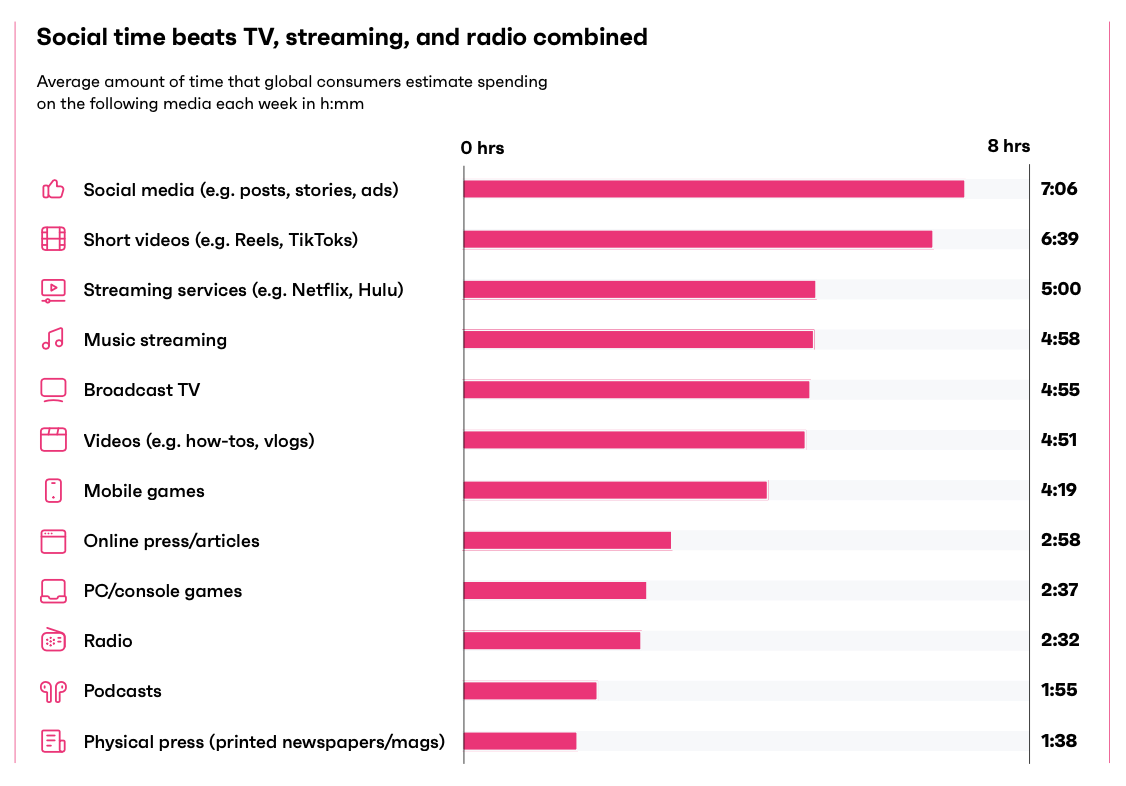
“Social media is far from dead—it’s the dominant media in our lives.” — GWI
AI can read content, but it cannot read context that shifts daily. A viral phrase can carry different meanings across micro-communities, and AI cannot track those shifts without continuously updated, real-time data. In other words, AI may understand words, but it cannot grasp the cultural logic behind these waves of remixing.
Today’s digital culture doesn’t just change fast—it is recreated faster than AI can relearn. As a result, insights derived from this process inevitably lag behind, and marketers unintentionally become outdated in the very creative race that AI accelerates.
The future of insight lies not in smarter AI, but in better data
GWI forecasts that a major shift in marketing in 2026 will be the combination of Agentic AI and structured data. When AI is connected to a brand’s real data—CRM systems, purchase behavior, advanced social listening, and attitudinal data—it stops “guessing” and starts analyzing with grounding. According to GWI, marketers using AI in this model report:
-
a 58% increase in unexpected insights,
-
a 71% improvement in team alignment,
-
a 55% increase in customer understanding.
The key point is this: AI is only as intelligent as the data it is taught with. The future is not about who adopts AI first, but about who trains AI better.
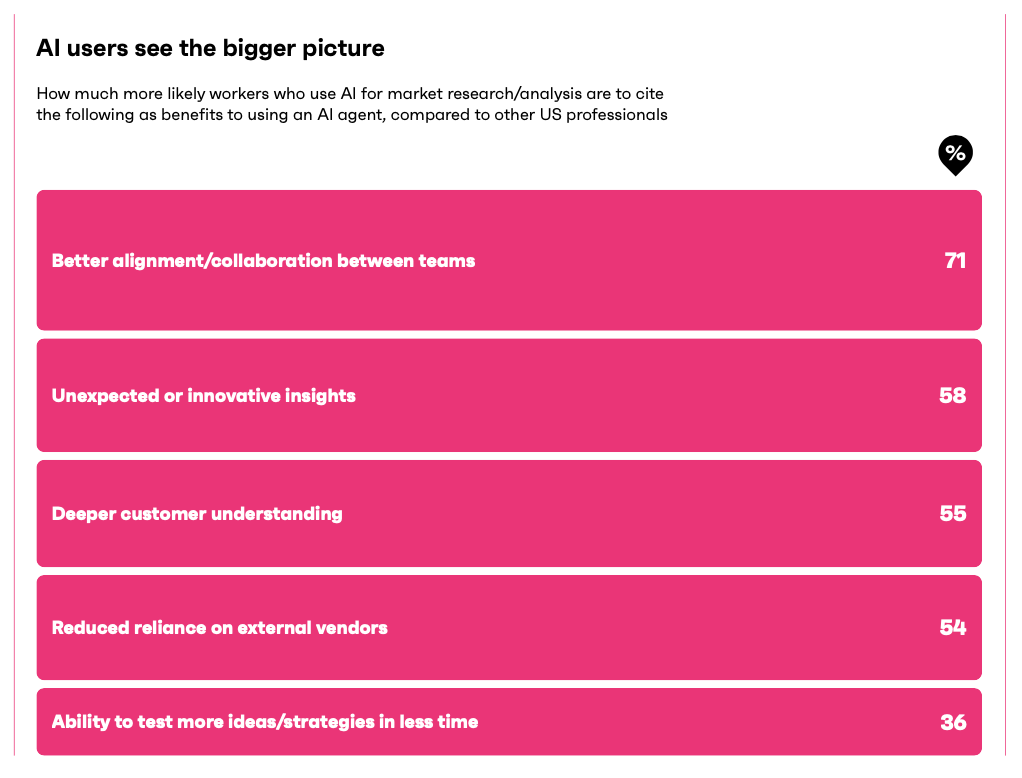
“AI users see the bigger picture.” — GWI
At BrandCreativity, we believe AI cannot replace the role of strategists, because insight doesn’t simply live in clear answers—it lives in what hasn’t been named yet, in small movements that are powerful enough to reshape market-wide behavior.
In an era where AI can generate thousands of ideas, AI can help brands move faster—but only human perspective helps them move in the right direction. And in a world where “not knowing that you don’t know” is the greatest risk, understanding the limits of AI is the first step toward overcoming them.
By BrandCreativity
(Based on GWI 2026 and The Unknown Unknowns of 2026)